

Callout-1.png

Higher Rates Reflect a Stronger Economy, Not Just Inflation

Inflation is part of the story, but not the most important part. The deeper insight is that yields are catching up to a genuinely higher nominal growth environment.

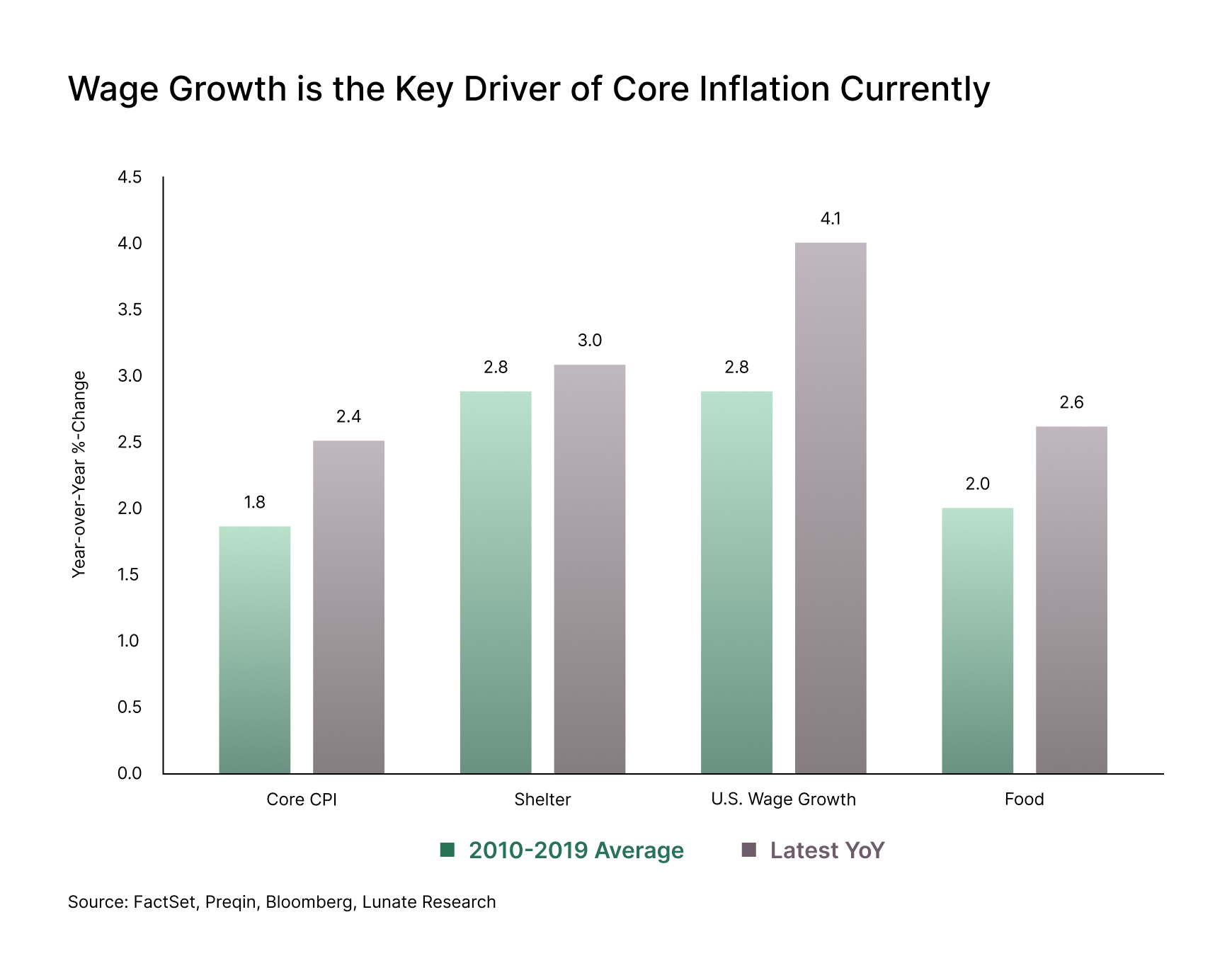
Core CPI has risen to 2.4% from a 2010-2019 average of 1.8%, higher than target but not particularly alarming given where it has come from. While supply-led factors such as oil have contributed, the more interesting drivers sit at the margin, particularly wages: US wage growth has reaccelerated to 4.1%, compared to a historical norm of 2.8%. We view this less as a warning sign than as confirmation that the economic cycle continues to extend. Higher rates driven by higher nominal growth are a fundamentally different and healthier scenario than higher rates driven by inflation alone.
Callout-2.png (1)

Private Markets Are Set to Rebound Alongside Public Equities

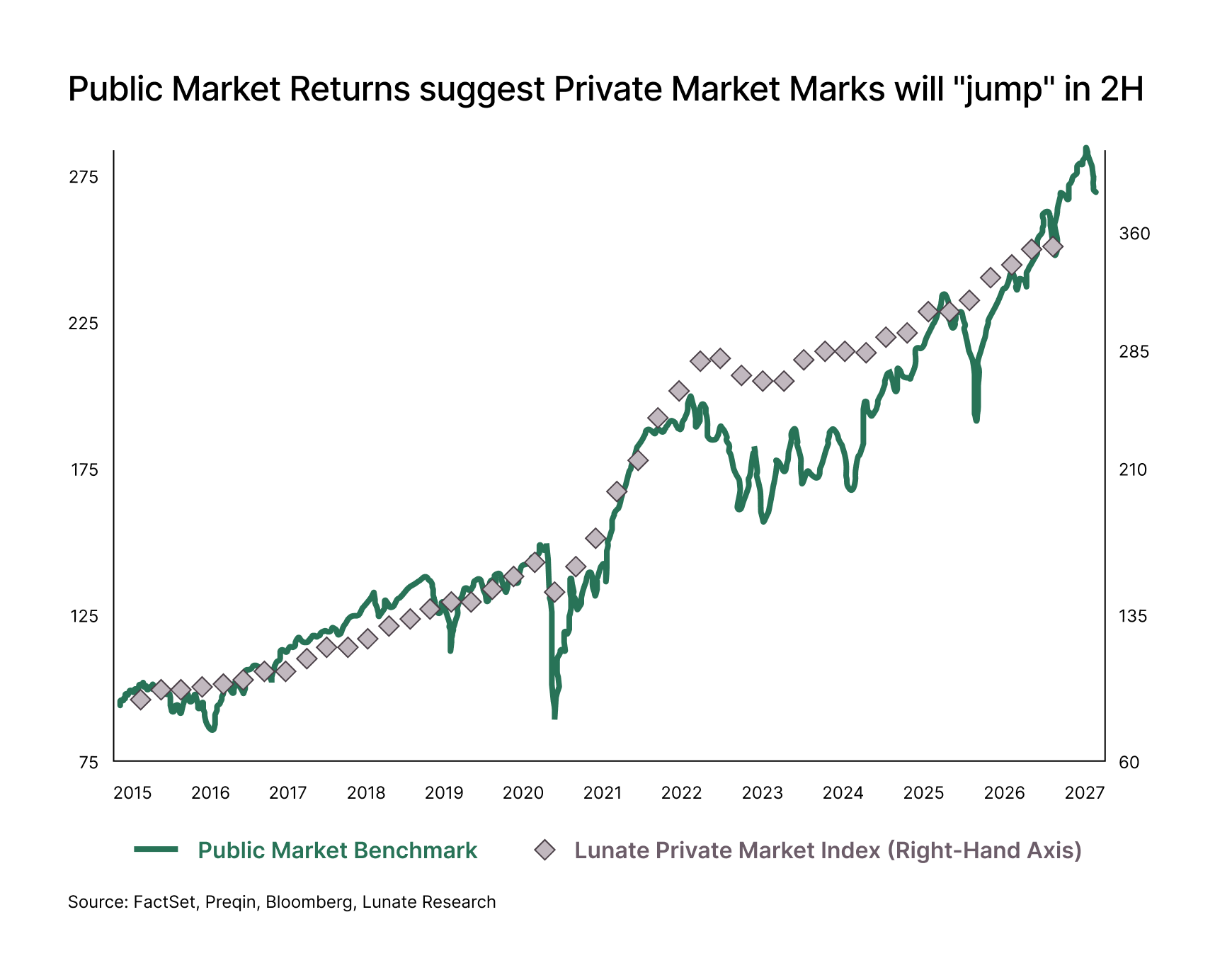
Private and public markets benchmarks typically move in close lockstep. Performance diverges around short, sharp public market corrections, but returns converge on the rebound.

Private market drawdowns have historically not tracked public markets during corrections; instead, marks tend to flatten for a quarter or two before catching up once public markets recover, effectively never fully reflecting the downturn. Public markets sold off sharply around the escalation of the Middle East conflict in March but have since recovered to near all-time highs. It looks increasingly unlikely that private markets will show any meaningful drawdown before rebounding to close the gap with public markets.

Callout-3.png (1)

Investors are Targeting Lower Margin Companies

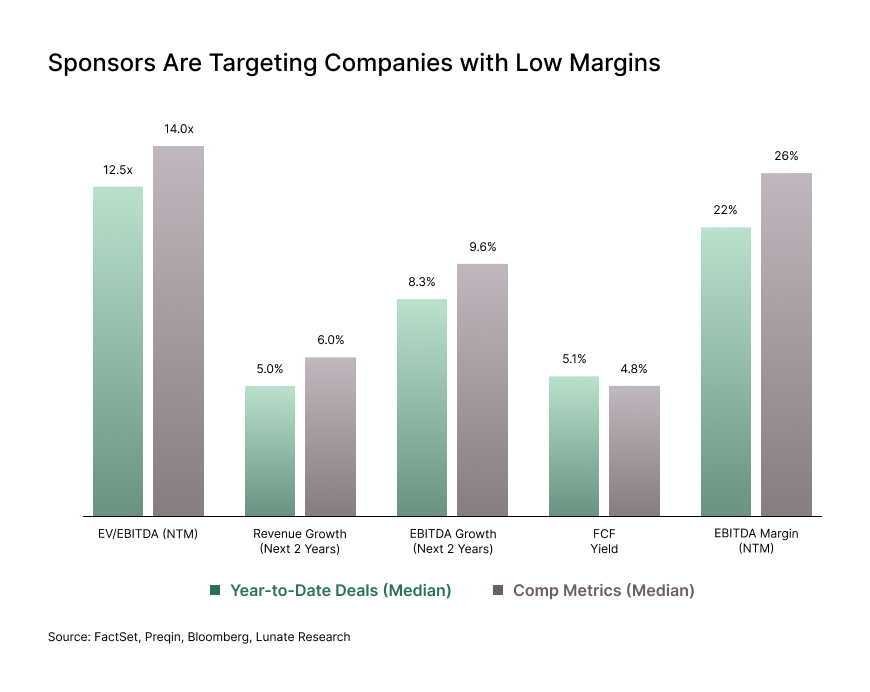
Investors are shifting their focus to margin improvement as the primary return driver rather than underwriting meaningful multiple expansion or outsized growth.

LBO targets carry expected EBITDA margins of roughly 22%, versus 26% for peers. This suggests that investors are buying companies delivering peer-like growth and a real margin gap, seeking to underwrite value creation through operating efficiency rather than financial engineering or re-rating. We think this is a sensible adaptation to a higher-rate, more growth-normalized world.

Download Full Report arrow-right